
At most SMEs, sales "sort of works". Referrals come in, the CEO reaches out to someone now and then, a deal happens here and there, but there is no written, repeatable process that someone else could run.
This article covers what a working B2B sales process looks like, what the right order is, and what the most common pitfalls are.
Why does the order matter?
Most people start with outreach: prospecting, LinkedIn messages, cold emails. That is the first instinct. But outreach only works well if the foundation behind it is solid: we know who we are targeting, why, what we say and what the next step is.
If the foundation is missing, outreach still does the work, but with poor results. Uninterested replies, rejections, burned decision makers.
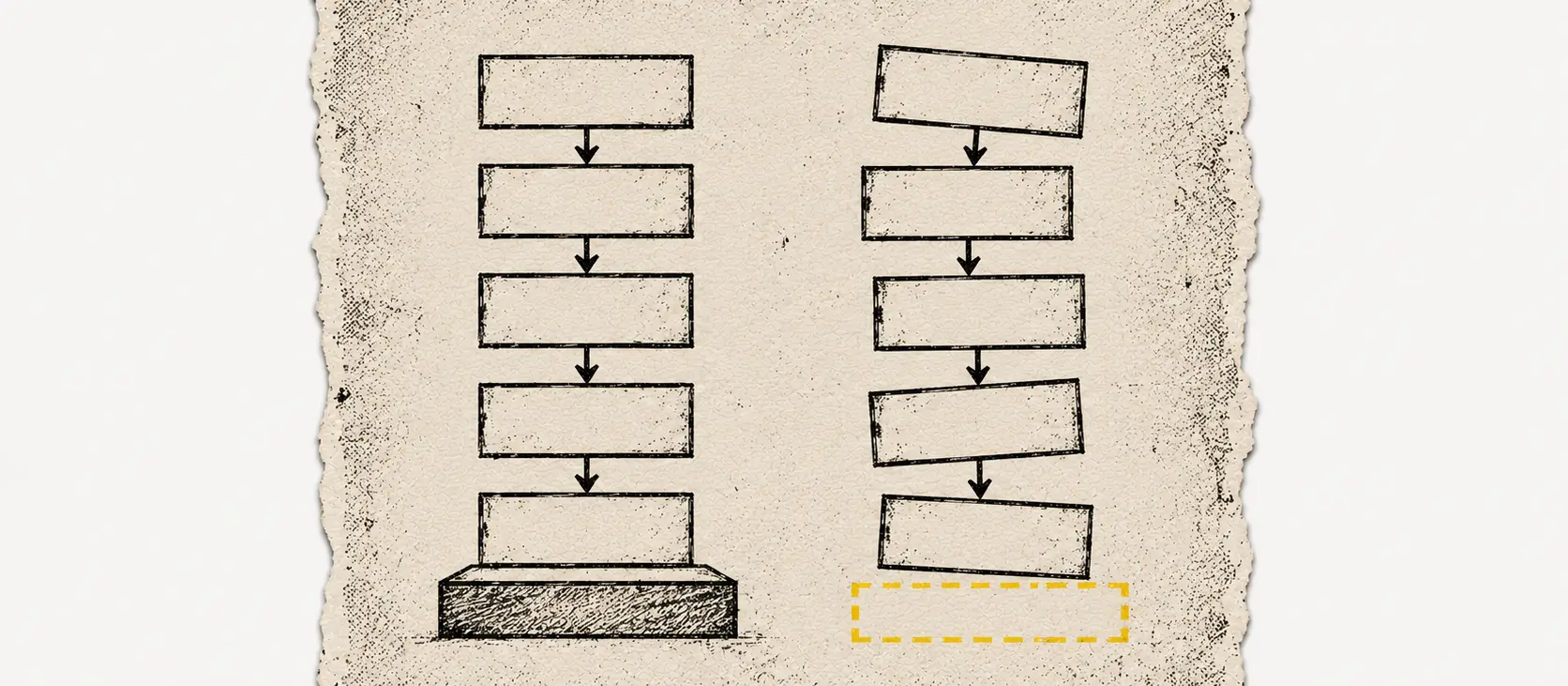
The 7 steps in order
Define your target market and ICP
Who is the ideal client? Industry, company size, decision-maker level, pain point, buying situation: the more precise, the better every other step gets. An ICP is not "SMEs with 20-200 employees". An ICP is something like: "manufacturing companies with 50-150 employees, where the managing director does the selling, wants to grow, but has no capacity".
Starting with a generic target market because "anyone could be a client". The broader it is, the less the message resonates.
Develop your sales message
What do we say when we reach out to a potential client? The message should not be about what we do, but about what the other side gains. The ideal message responds to a specific pain point and promises a specific result.
Sending generic "we are the best" messages. Every company says that.
Build your prospect list
Who are the specific 30-100 companies (and people) we will reach out to in the next 30 days? The list needs to be filtered: industry, size, decision-maker level, and if possible, more than one contact per company.
A random list with company names and phone numbers, but no decision-maker contact, industry filter or priority. That way outreach just drains energy.
Outreach: across multiple channels
LinkedIn connection request + message, a cold email sequence (3-5 emails), and cold calls where appropriate. Multi-touch is the key: 80% of B2B sales close between the 5th and 12th touchpoint. One message is not enough.
Sending one email and waiting. Giving up if no reply comes after 3 days.
Manage your CRM and pipeline
Every potential client should have a record somewhere: who they are, where they stand, when the next touchpoint is. It does not need to be complicated: a simple CRM (Pipedrive, HubSpot free, or even Notion) works. The point is that it should not live in your head.
Excel + "I'll remember". That way follow-up always slips.
Negotiation and proposal management
After the first discovery call, a structured negotiation process: uncovering the pain point, clarifying needs, proposal, presentation. The proposal should not just be a price list, but a document that makes the decision easy within the decision maker's own logic.
Sending a quote before the need has been properly uncovered. Price alone does not make the decision.
Follow-up and closing
Sending the proposal is not the end: that is the most common mistake. Follow-up is regular: 2 days, 1 week, 2 weeks, adding value each time, not just "have you decided?". Closing is not pressure, but help with the decision: what they gain, what the risk of doing nothing is, what the next step is.
Sending one email after the proposal and waiting. Most deals fail to close because there was no follow-up.
Minimum viable process: a clearly defined ICP, one well-developed message, a targeted list of 50 companies, a LinkedIn + email outreach sequence, and a simple CRM. That is the minimum that already produces repeatable results.
No process in place? We'll build it together.
As part of the setup fee, we build the sales foundations: target market, messages, list, CRM, outreach process. Then we take over active selling on a success-fee model.
Get in touch →How long does it take to build?
Building the full foundation, from refining the ICP to a running outreach sequence, realistically takes 3-4 weeks. This is the period the setup fee pays for: the foundation is needed before the first 30-day active sales period can start.
After that the process runs: outreach, negotiation, follow-up, closing. With measurable activity every week and regular reporting.